Studio.
A London practice and research laboratory — working across three continents, in seven languages, on buildings and the tools that produce them.
Our History
WUA Studio was founded in London in 2021 to ask a question that could not be asked from inside the institutions our founder had spent twelve years working within.
Before WUA, Shaobo (Shawn) Wu held senior design and management positions at Foster + Partners, HOK, and Sordo Madaleno — leading masterplans, cultural buildings, and resort projects from London to Abu Dhabi, Riyadh to Shanghai. The work was significant. The model behind it, increasingly, was not.
WUA began as a working answer: what should an architecture firm be in the age of intelligence?
Five years on, we operate from three locations. Our London studio is the creative engine and central hub. A business development liaison in Riyadh anchors our presence in the Gulf. A collaborative studio in Shanghai supports East and Southeast Asia. Together they give us roughly sixteen continuous hours of coverage across European, Middle Eastern, and Asian time zones.
The question we started with is still the one we are working on — in public, in practice, project by project.
What We Do
One sensibility, across the whole built environment.
From desert hotels to urban regeneration, from public art to brand spaces — the range itself is the argument.
Masterplanning & Architecture
From feasibility and concept design through to technical design and contract administration.
Interior Fit-Out, Art & Installation
Integrated spatial design, bespoke interiors, public art, and experiential installations.
Research, partnerships, low-carbon practice.
WUA_Lab collaborates with universities, local councils, and energy partners on applied research that lowers carbon and improves how buildings are run — from BEMS Lite, our open building-energy management system co-developed with industry, to the Lintel platform for spatial intelligence. Social impact is part of how we work, not a side note.
Technical capabilities, beyond design.
Four service lines that translate spatial intelligence into deliverable work — for our clients and for the wider industry.
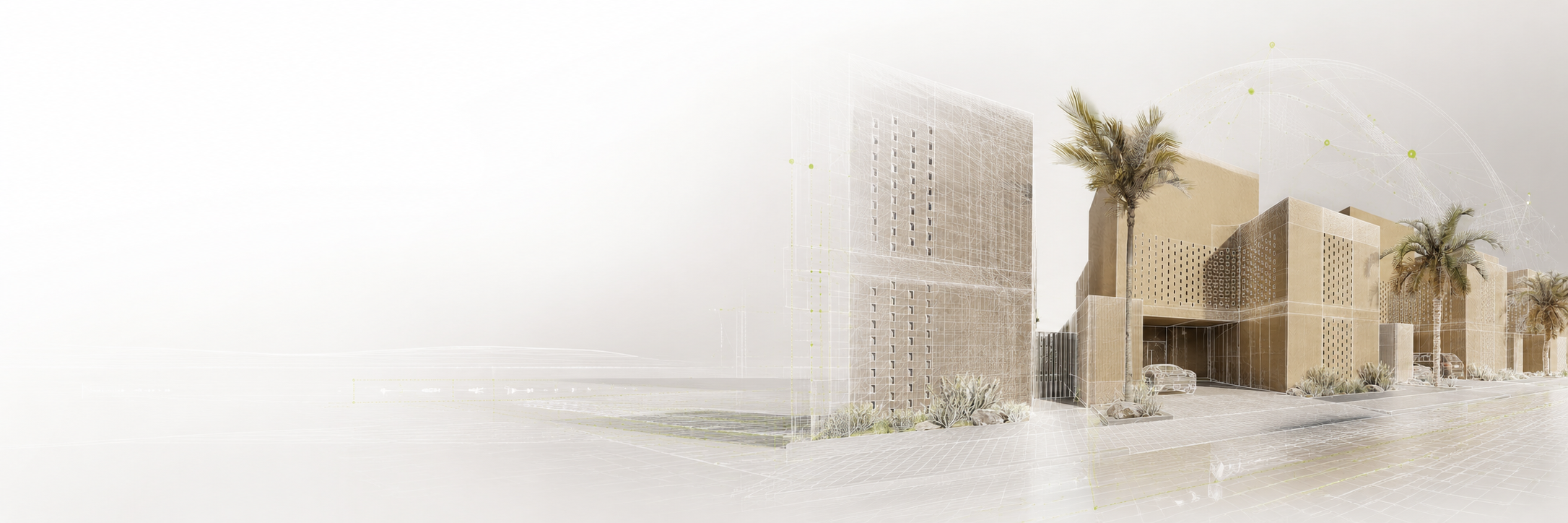 01 BIM & Computational Design Support
 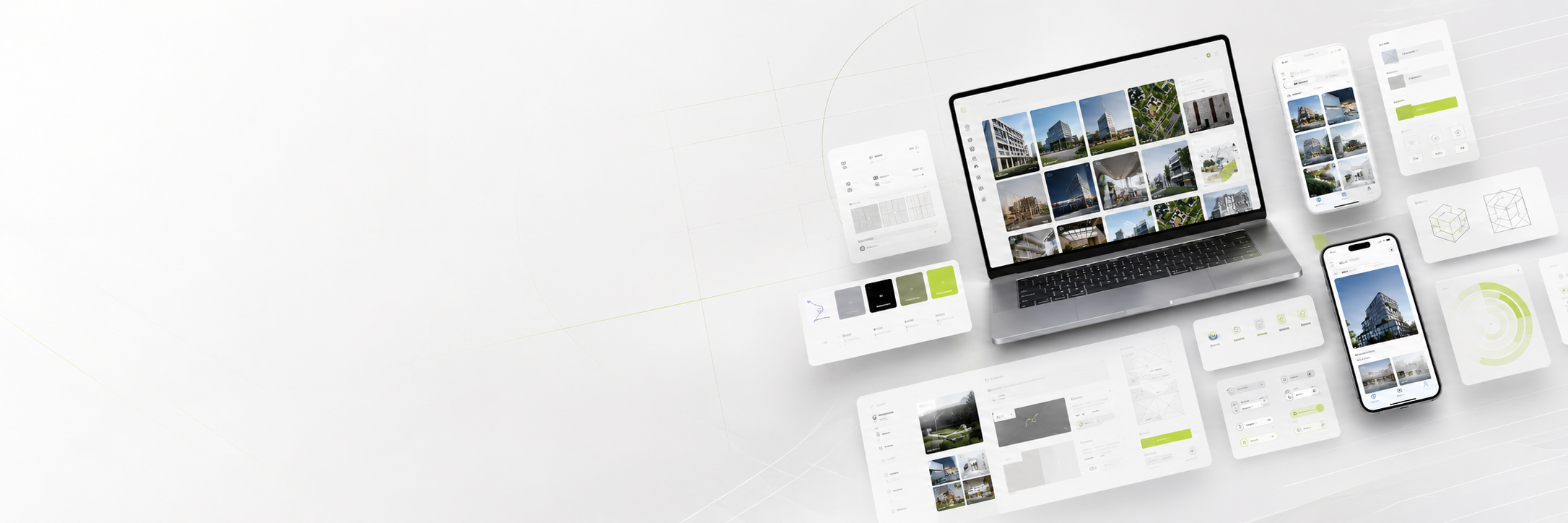 02 Digital Product Design
 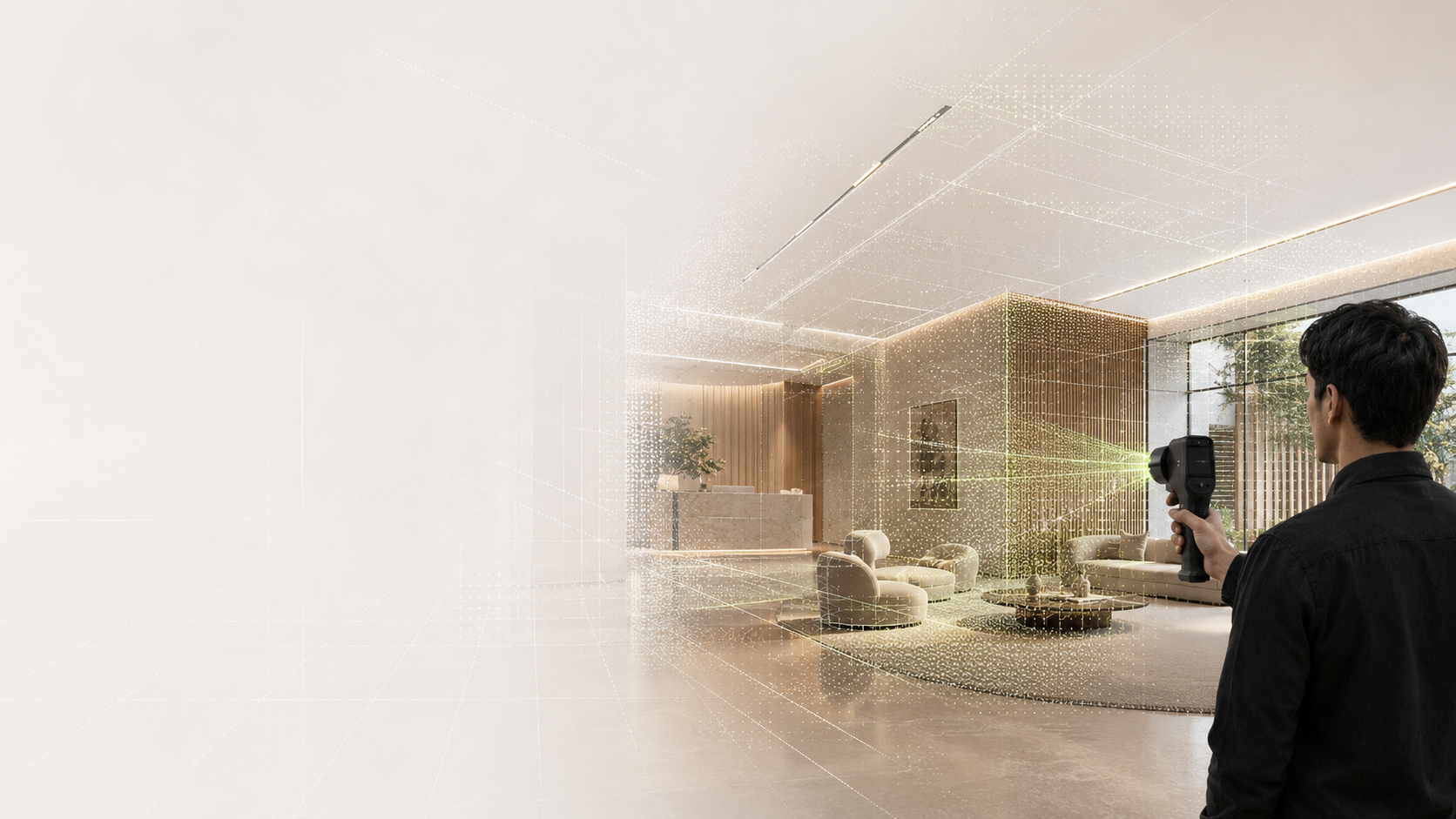 03 Spatial Intelligence Services
 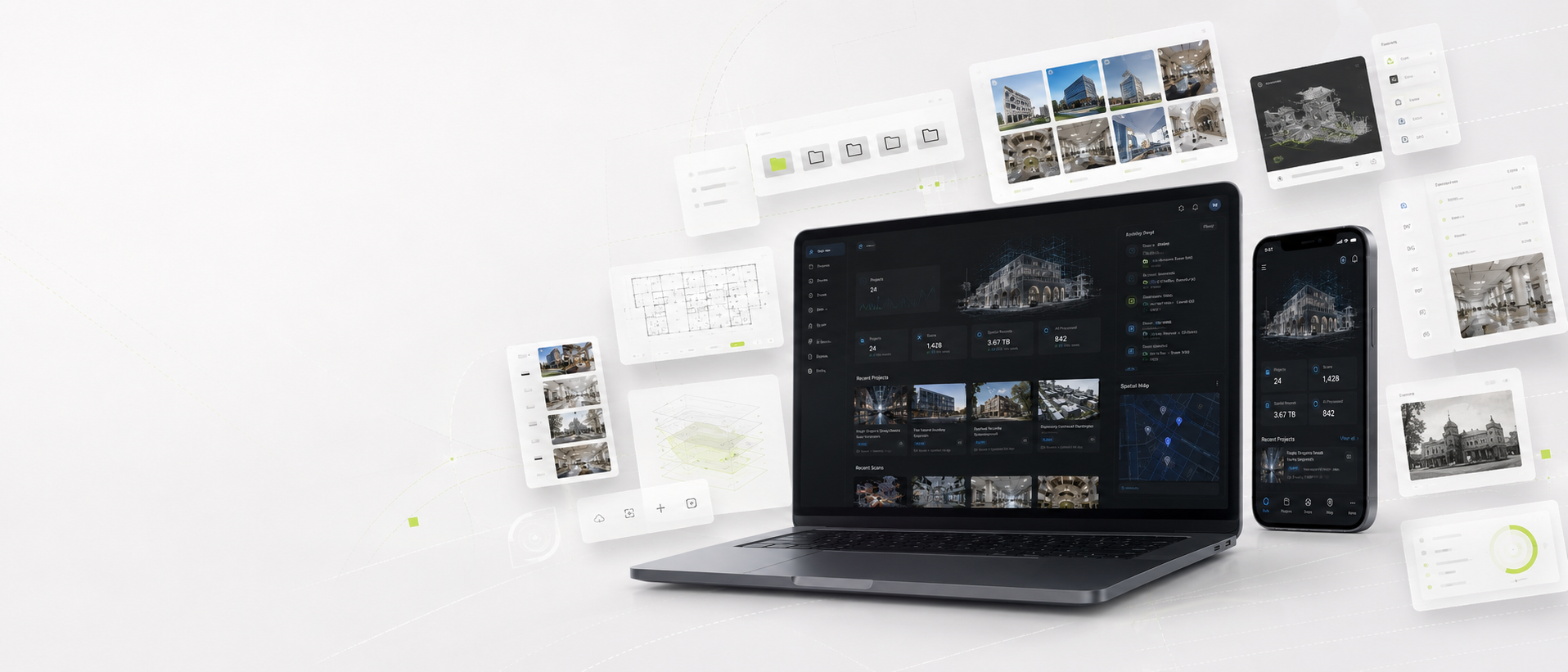 04 Digital Assets Management
 Range of experience
Across the studio and the prior tenure of our senior team, our work spans six sectors — masterplanning, hospitality, residential, culture and heritage, sports and entertainment, and arts and public space.
Recent WUA Studio projects include the Quman Island masterplan in Saudi Arabia, the Tulcea Central Area regeneration in Romania, the Dunhuang Desert Hotel in China, and the Art Field Nanhai installations.
Senior team members contributed as key architects to projects including Yas Arena Abu Dhabi, Dubai Expo 2020, the Red Sea Project — Shurayrah Island, and the British Museum White Wing — during prior tenure at Foster + Partners, HOK, and Sordo Madaleno.
Combined design and construction scale across the studio and the senior team's prior experience exceeds 1.2 million square metres. We are currently delivering active work in the UK, China, and Saudi Arabia, with project history reaching from the Gulf and East Asia to Europe.
The breadth is not opportunism. The same sensibility — context read carefully, technology used deliberately — translates across scale, climate, and brief.
View all projects →Our Partnerships


Active partnerships: University of Greenwich Knowledge Exchange Centre (MOU), Royal Borough of Greenwich, Knight Dragon at Design District, and energy-sector collaborators on BEMS Lite. Cross-industry work spans furniture algorithms, digital archives for galleries and art festivals, virtual touring, and low-carbon retrofit research.
Our Culture
The studio takes its wider role seriously — as a teacher, a host, and a participant in the communities it works within.
Academic partnerships. Our research practice runs through the academy. A Knowledge Exchange Centre MOU with the University of Greenwich anchors applied research in low-carbon design and spatial intelligence. Our Tech Collective draws from the Architectural Association, where researchers continue AA-affiliated work alongside studio commissions. Our founder mentors at the University of Greenwich and guest-tutors at Syracuse University London.
Internships. We offer paid internships to architecture and computational design students from a range of schools. Interns work on live projects with mentorship from senior architects and researchers — not on separate sandbox tasks. The intent is reciprocal: fresh perspectives in, real experience out.
Learn more and apply →Social Impact. Social impact is part of how we work, not a side note. BEMS Lite, our open building-energy management system, is co-developed with industry partners and released for use beyond our practice. We collaborate with Royal Borough of Greenwich on local engagement, and partner with cultural institutions on public art projects including Art Field Nanhai. We also take on pro bono work where the brief aligns with our research interests or community needs. When a project can lower carbon, archive a cultural site, or open a tool to the wider field, we treat that as part of the work — not a separate category.
Diversity, Equity & Inclusion. The studio runs across three offices, seven working languages, and a team with varied training and routes into architecture. Range is the operating condition of the work — not an initiative around it. We hire for curiosity and capability, and we listen.
Our Team
The studio is structured as two collectives — Design and Tech — led by founder Shaobo (Shawn) Wu, after twelve years of senior practice at Foster + Partners, HOK, and Sordo Madaleno.
Around the leadership sit architects, computational designers, BIM specialists, and AI researchers — trained at institutions including the Architectural Association, Newcastle University, and Cornell University, and working across London, Shanghai, and Osaka. We extend further through long-term collaborators: Matter for structural engineering, JAMA for urban design in China, and consultants brought in by project.
We do not have generic project teams. For each commission we assemble a bespoke group, drawing from both collectives, our partner network, and where appropriate, the academic community.